Four-Room Audience Participatory Installation and Information Metabolism System
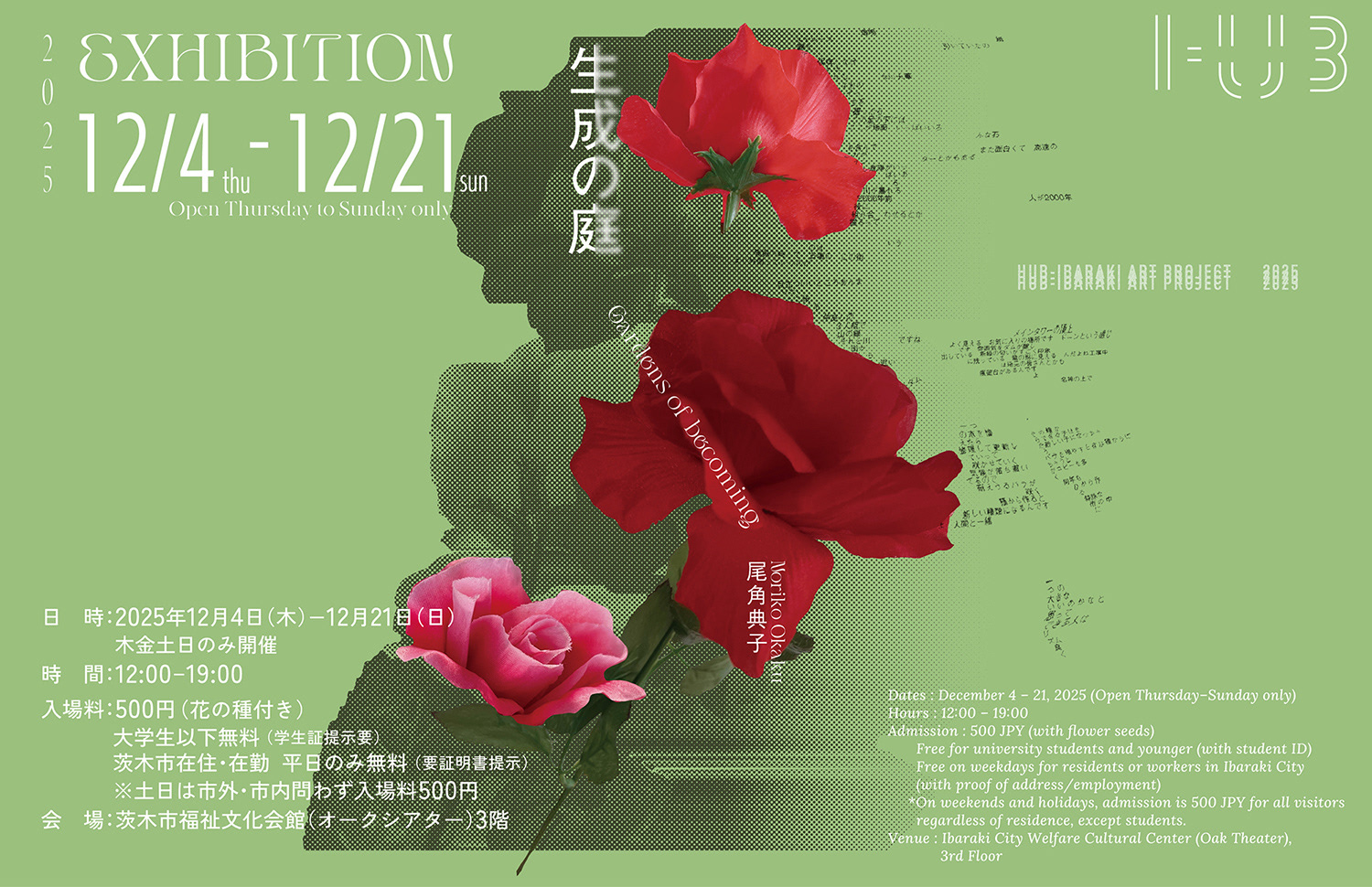
December 4 – December 21, 2025
Venue: Fukushi Bunka Kaikan (Oak Theater), 3F, Ibaraki City, Osaka, Japan
Organised by: Ibaraki Cultural Promotion Foundation (Public Interest Incorporated Foundation)
Supported by: Ibaraki Chamber of Commerce and Industry, Ibaraki Tourism Association
Grant: Japan Foundation for Regional Art-Activities(JAFRA), Kao Foundation for Arts and Sciences
Commissioned by Hub-Ibaraki Art Project, Osaka/Ibaraki
Curated by : Chie Uchida (Hub-Ibaraki Art Project Director, Art7ten)
Programming : Sotaro Kido
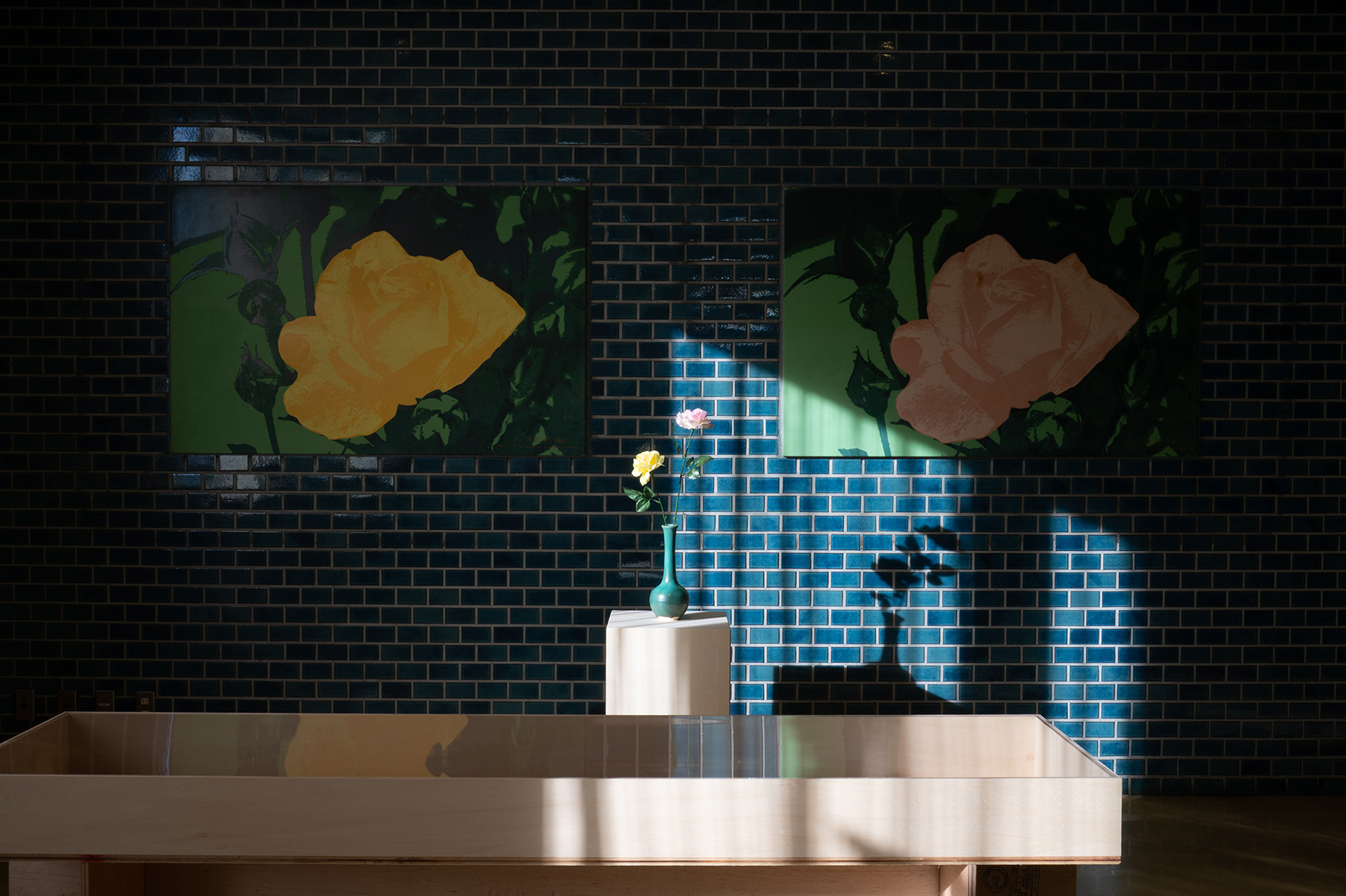
Like soil that breaks down dead matter to nurture the next life,
this project is an attempt to explore how information can
continue to metabolise and generate difference from within relationships.
In an era where algorithms converge the world toward homogeneity,
we seek to define the human horsepower (the emergent power)
required for that purpose.
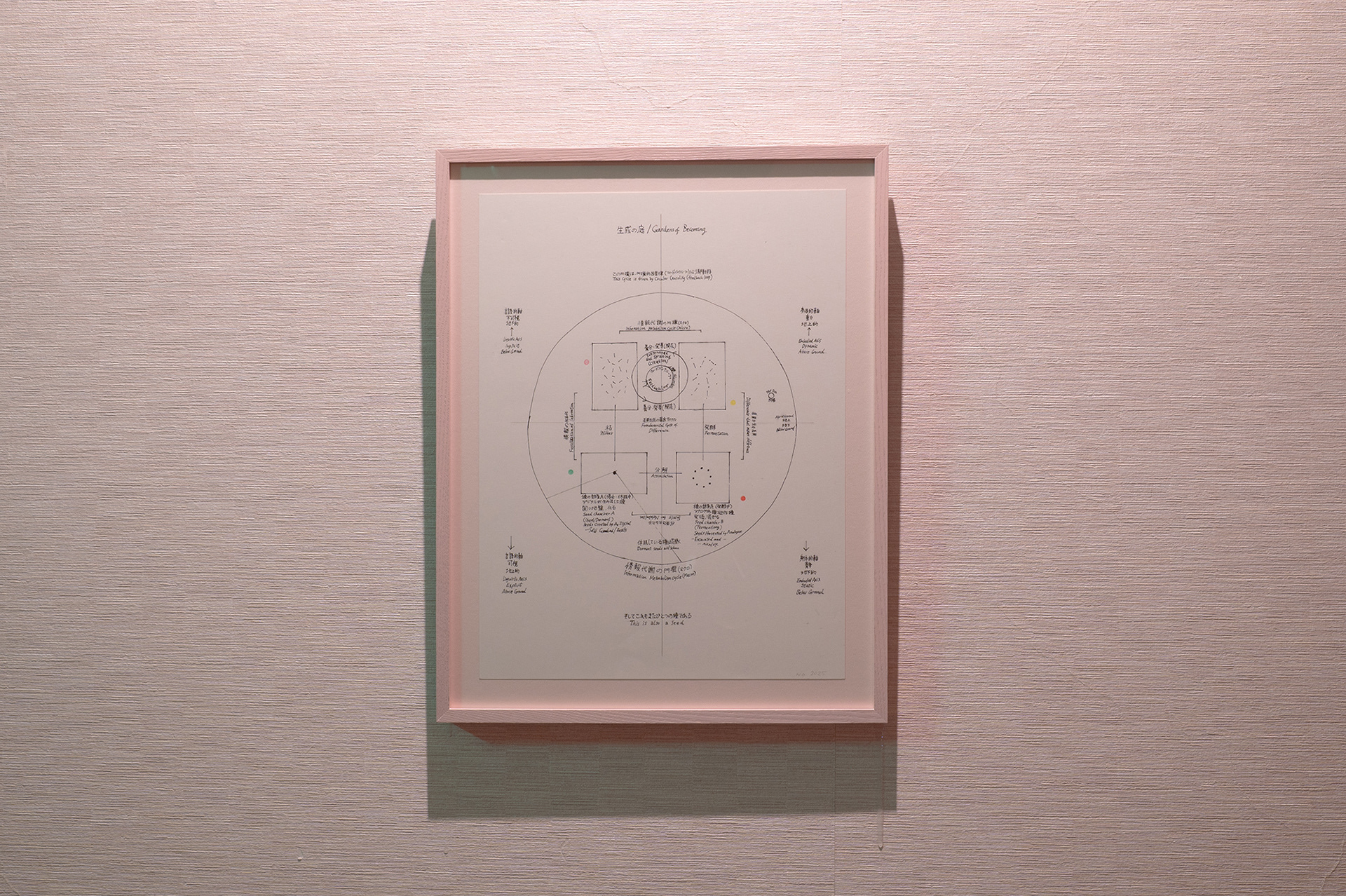
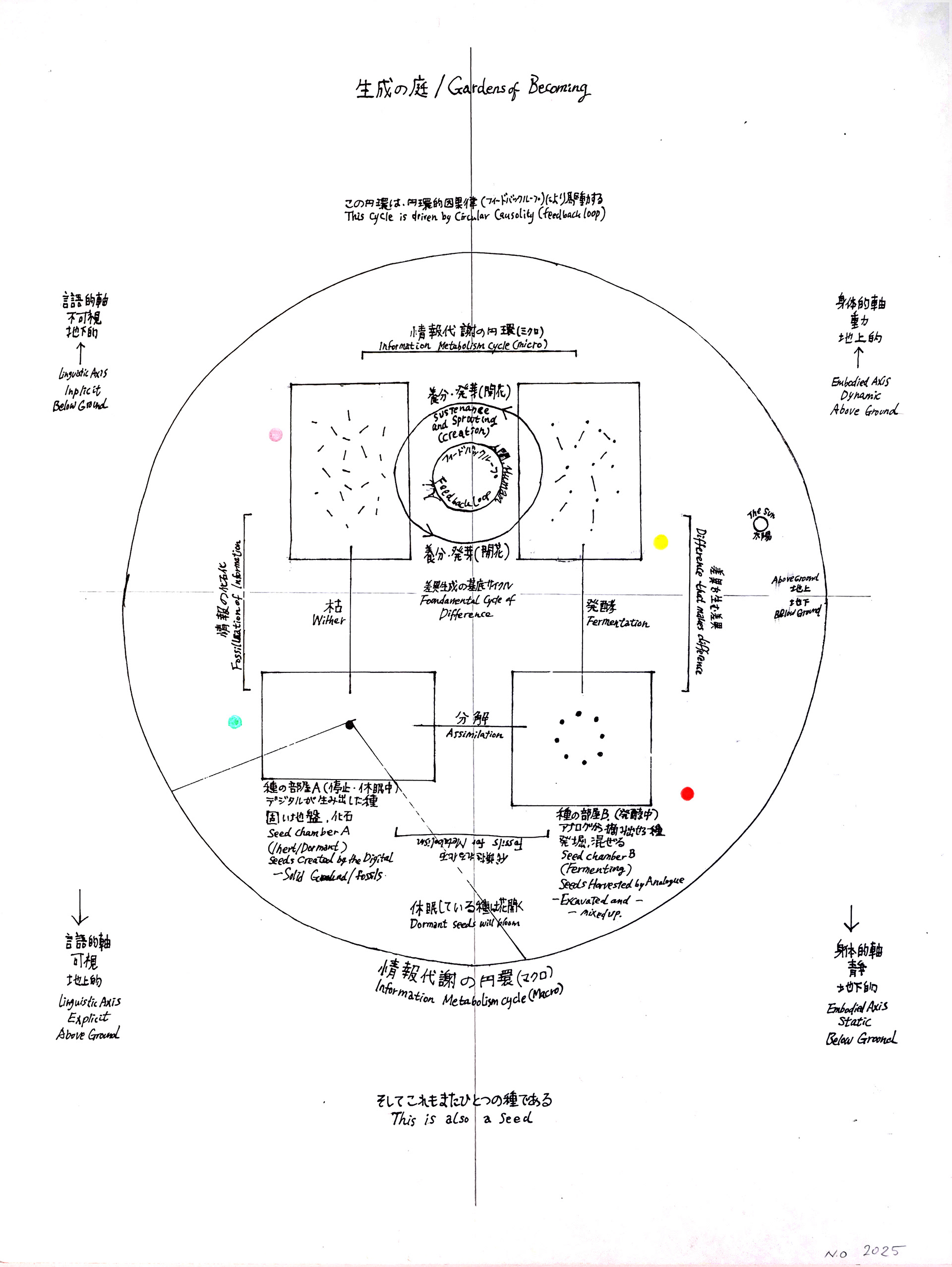
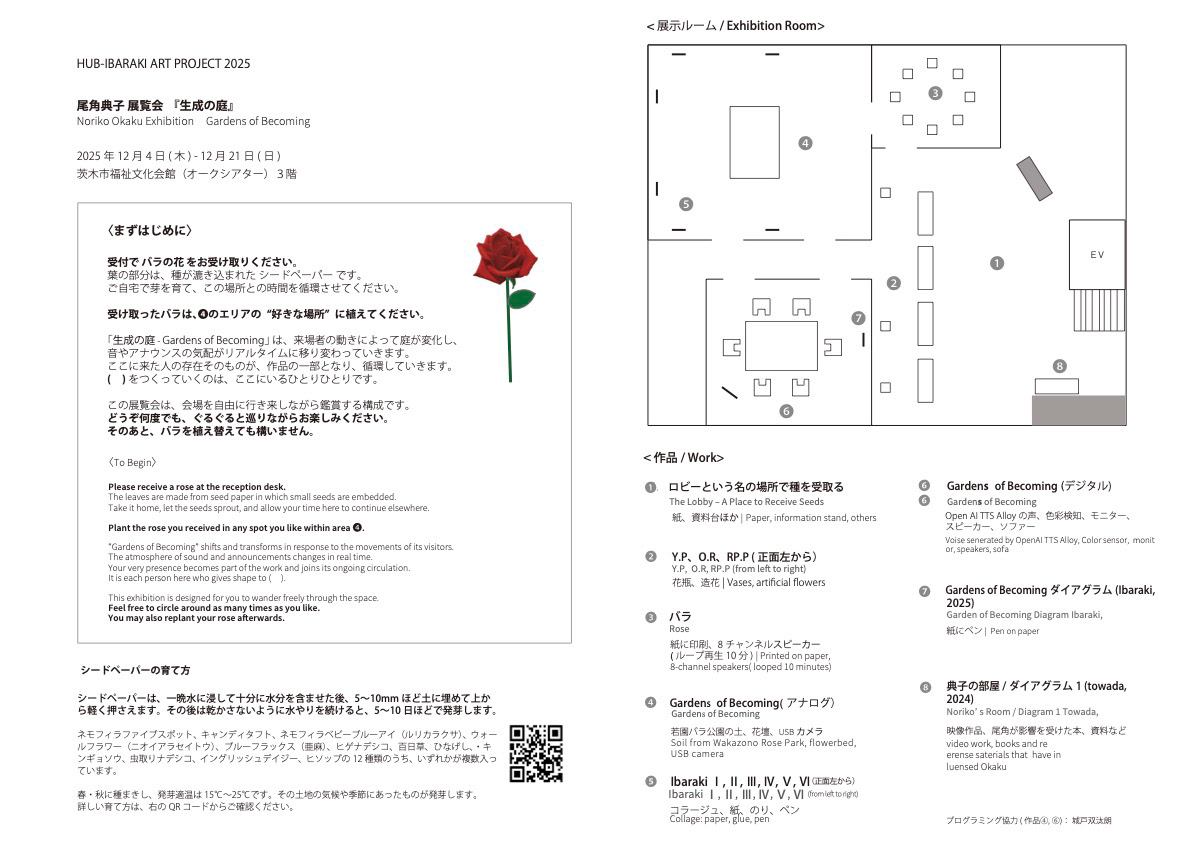
「生成の庭」ダイアグラム
A diagram of Gardens of Becoming
Exhibition installation photographs will be updated after the show.
A “Gardens of Becoming Diary” will also be published periodically on the TEXT / WRITING page soon.
Gardens of Becoming Short Version:
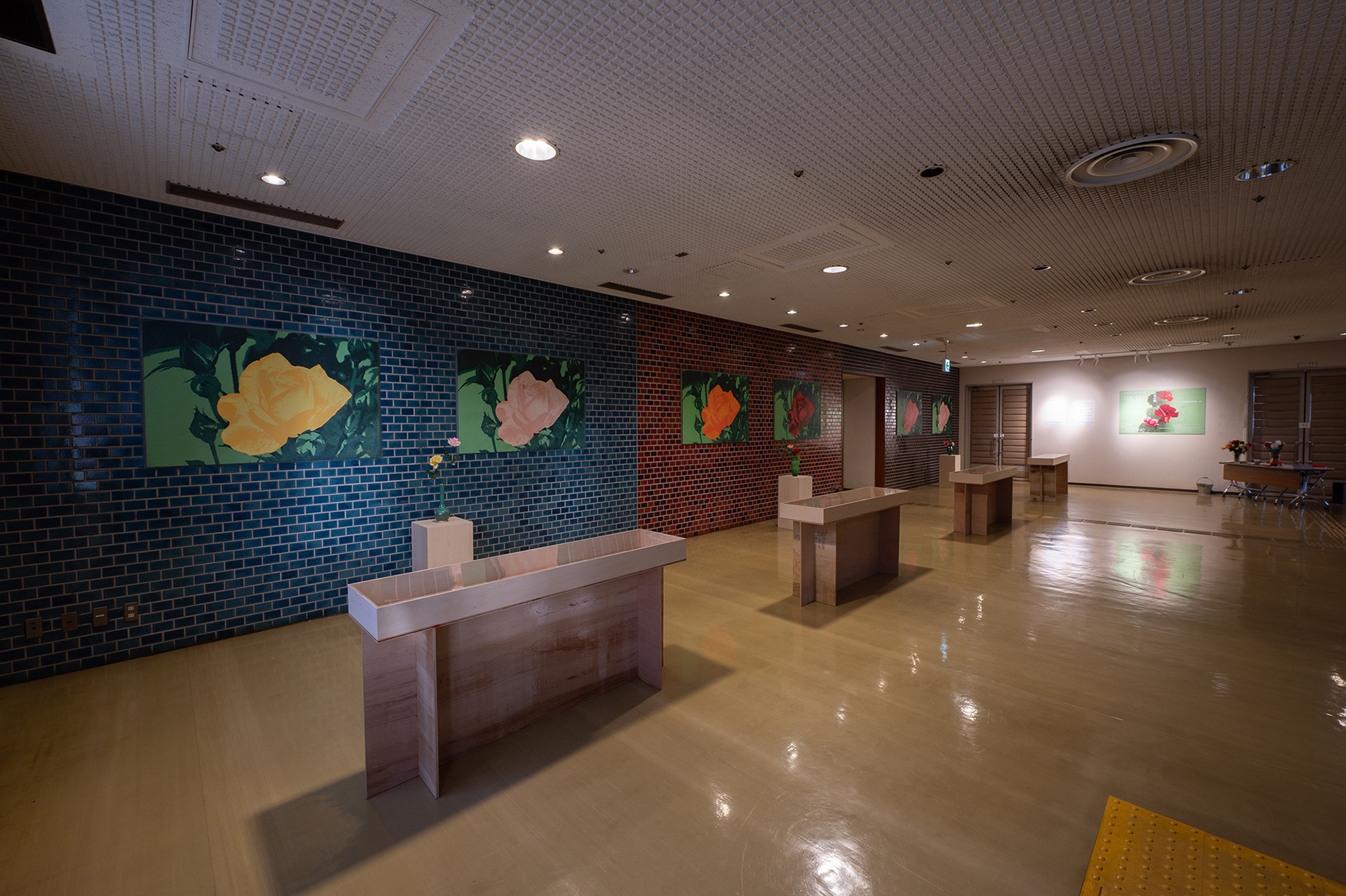
This installation consists of four rooms:
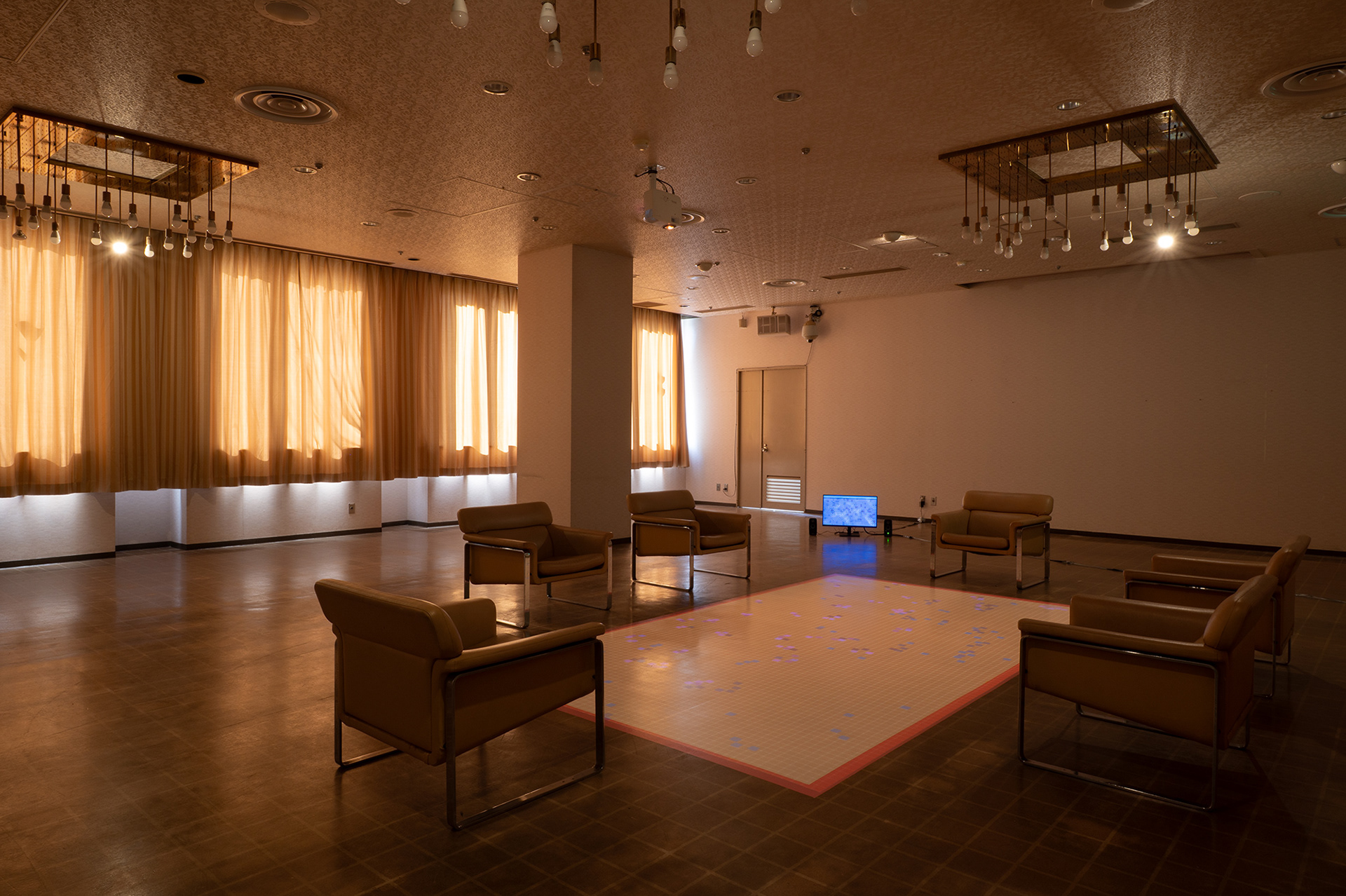
the Lobby (green), the Red Room, and two rooms that operate as a circulatory circuit, the Analog Room (yellow) and the Digital Room (pink). The latter two function inseparably as a single thinking apparatus titled 'Garden of Becoming'.
A concept that runs through the entire work is information metabolism.
the Lobby (green), the Red Room, and two rooms that operate as a circulatory circuit, the Analog Room (yellow) and the Digital Room (pink). The latter two function inseparably as a single thinking apparatus titled 'Garden of Becoming'.
A concept that runs through the entire work is information metabolism.
Just as soil decomposes withered plants to nourish the next sprouts, information too becomes fixed, unearthed, mixed, and transformed - a seed for what will emerge next.
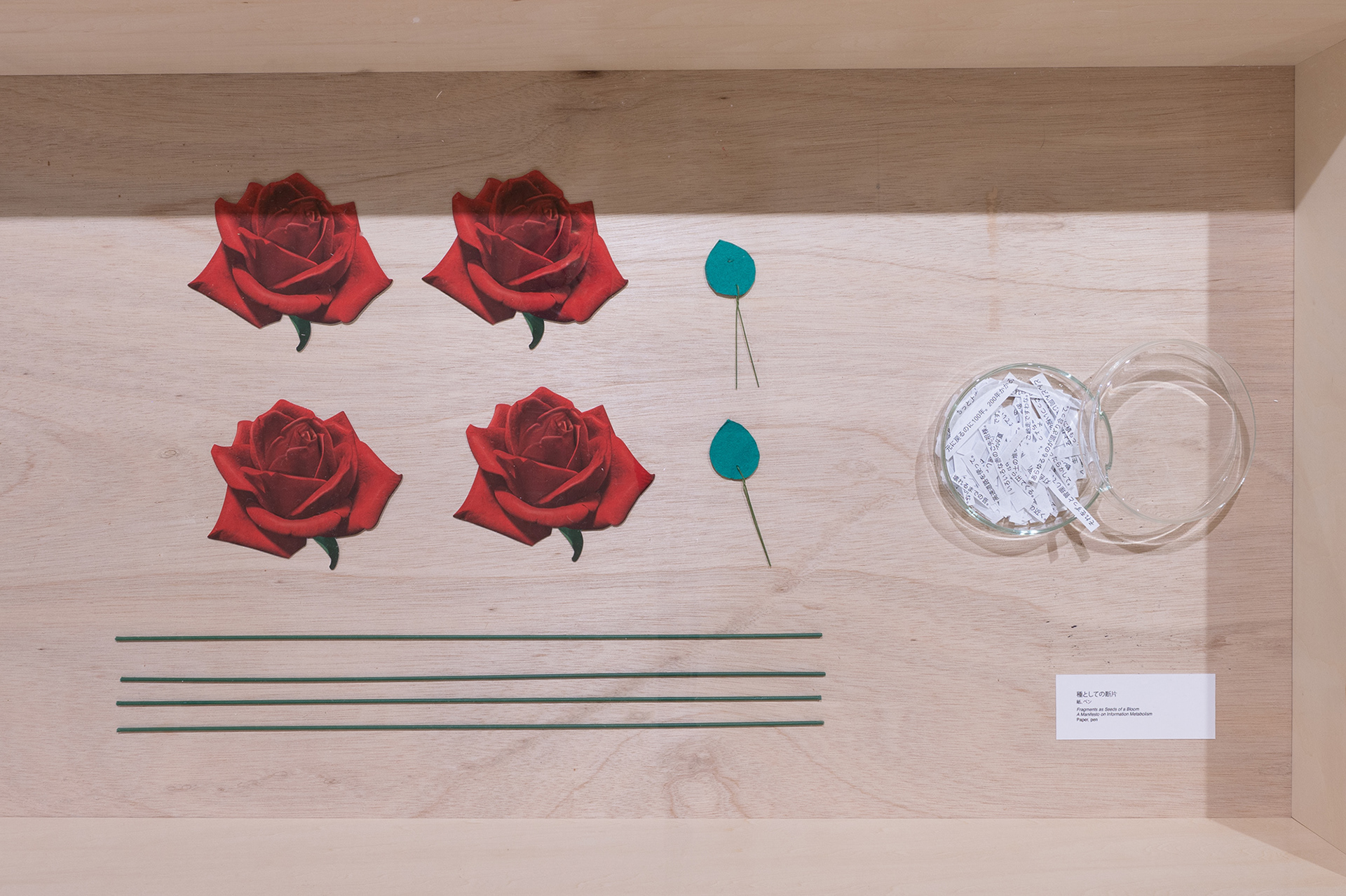
In the Lobby, each visitor receives a paper rose. It is a symbol of replicable information, and on its reverse are written fragments of Ibaraki citizens’ voices. A polished surface on one side, instability and tremor on the other.
This rose is a dormant seed of information, not yet awakened.
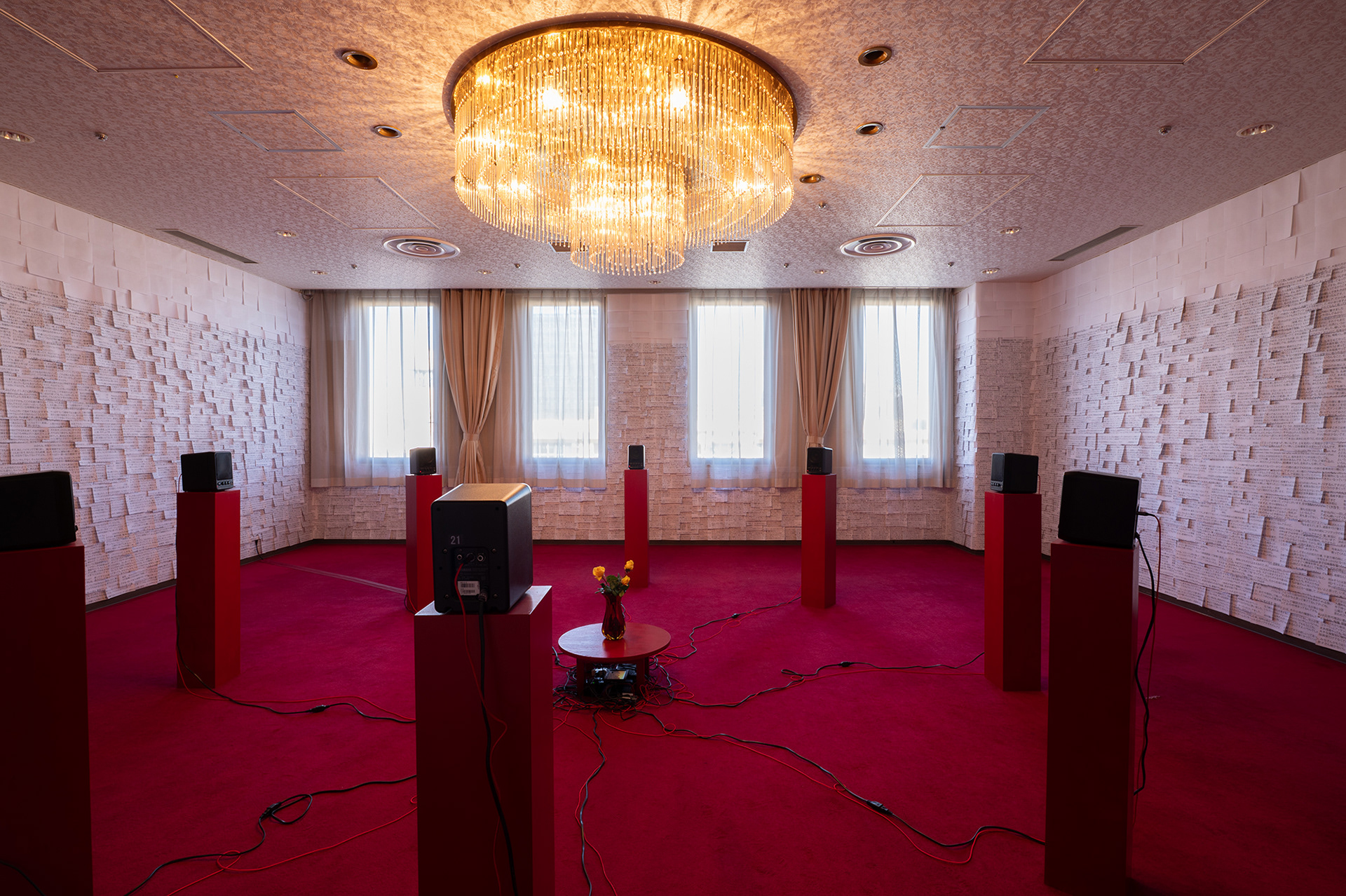
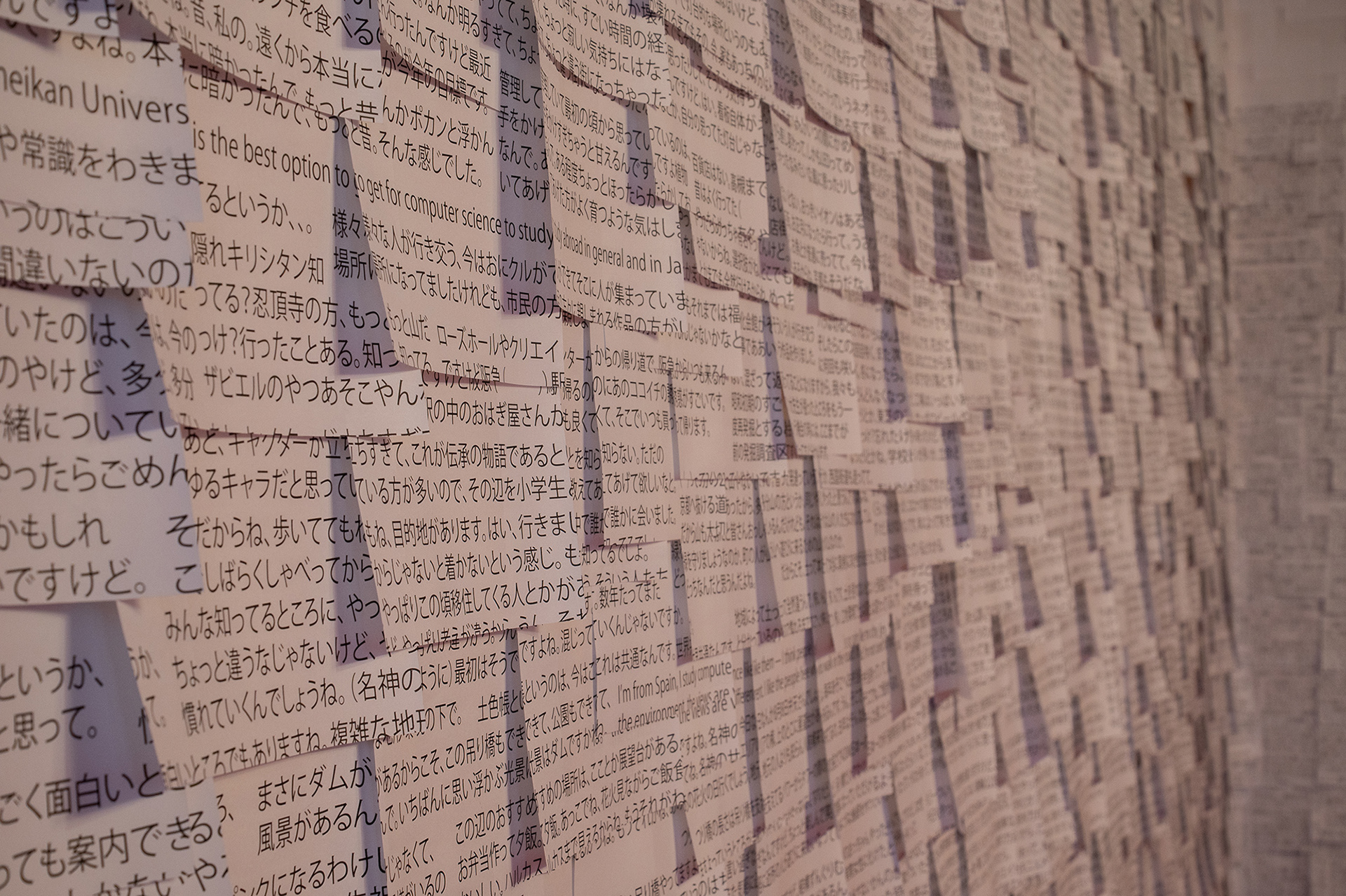
The Red Room is a sedimentary layer of Voices echo from eight speakers while transcribed testimonies cover the walls, and to read them is to excavate. Here, “Ibaraki City” is not a fixed image, but something that arises through the convergence and relation of many voices.
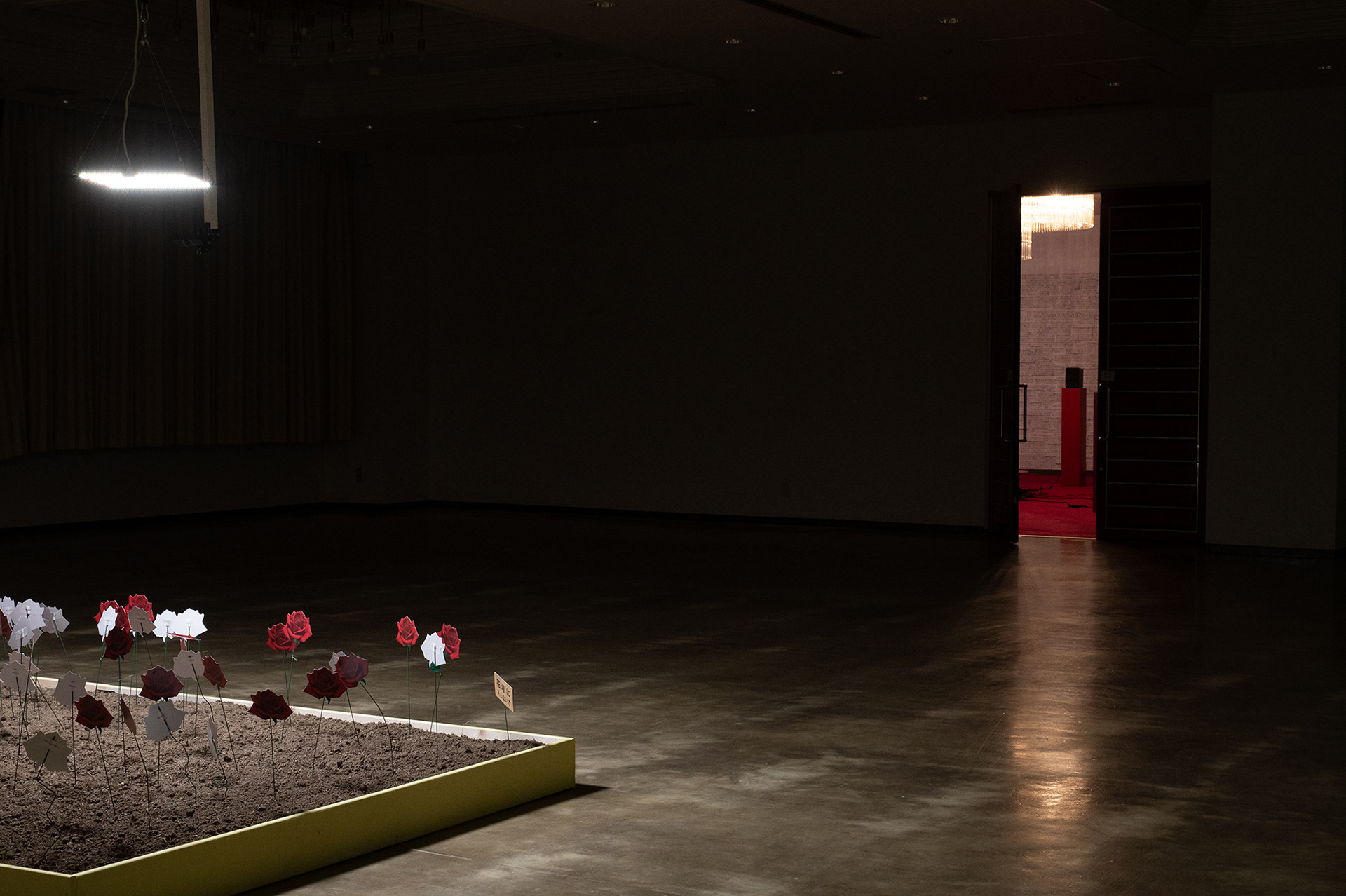
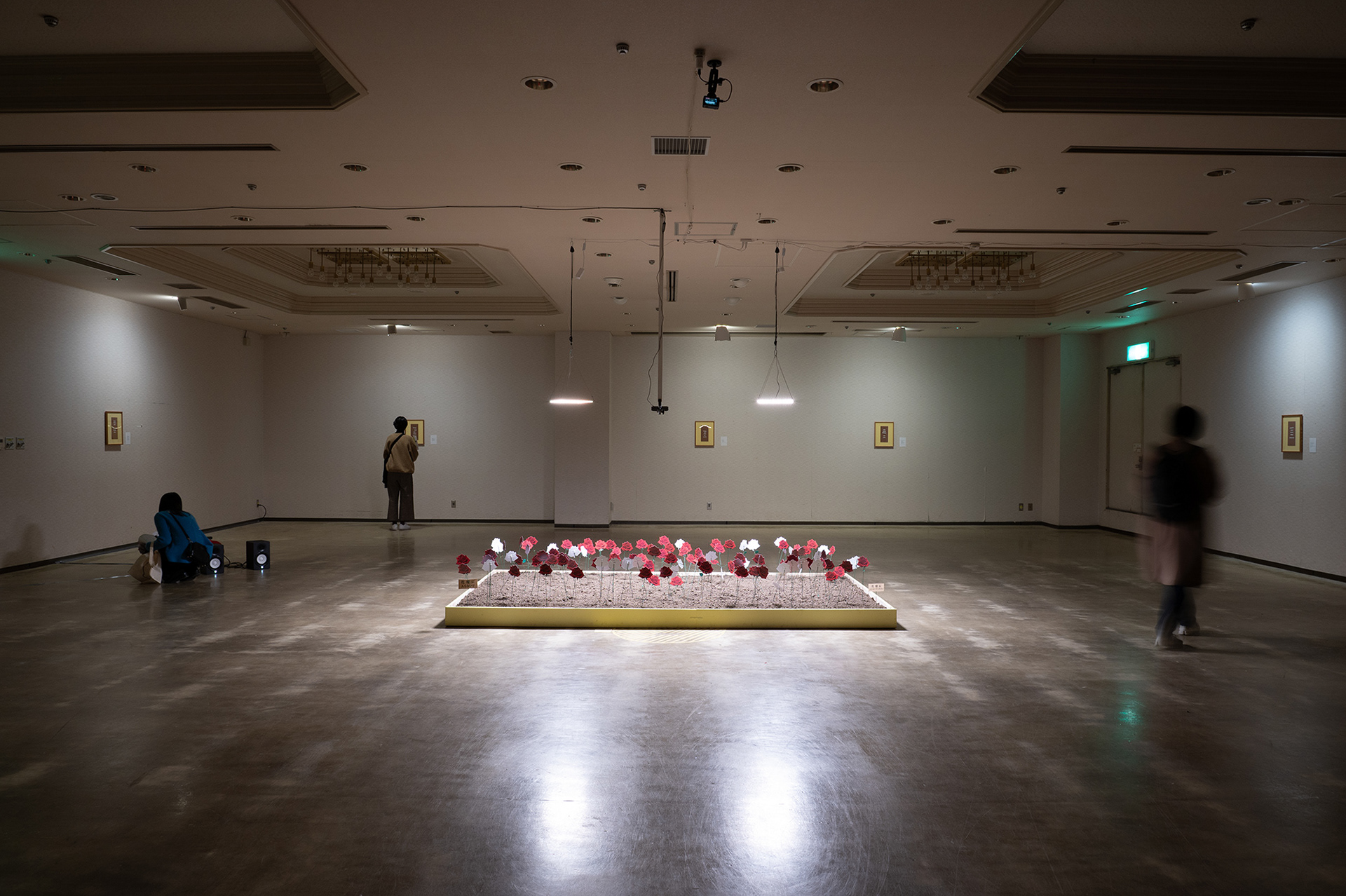
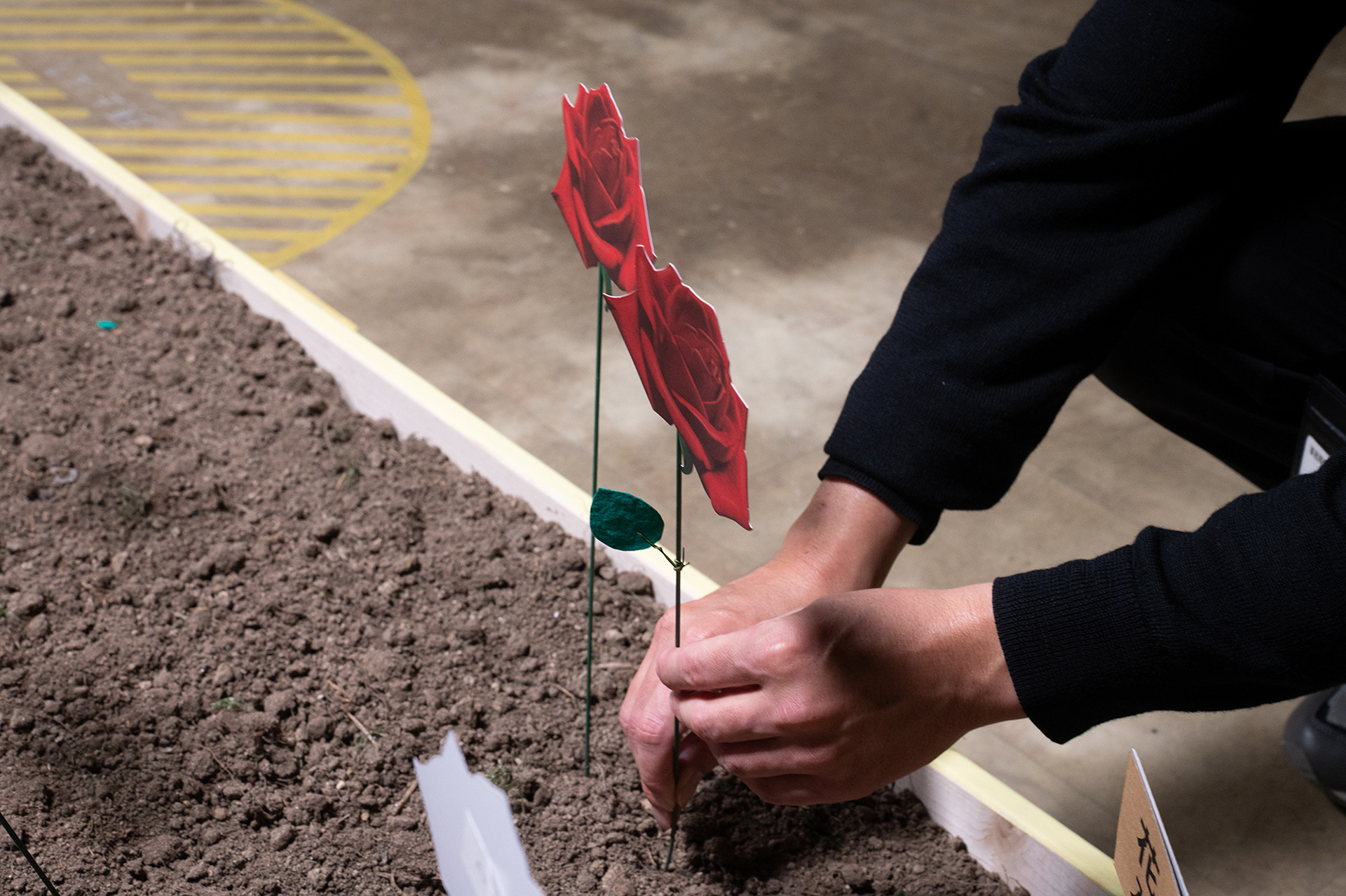
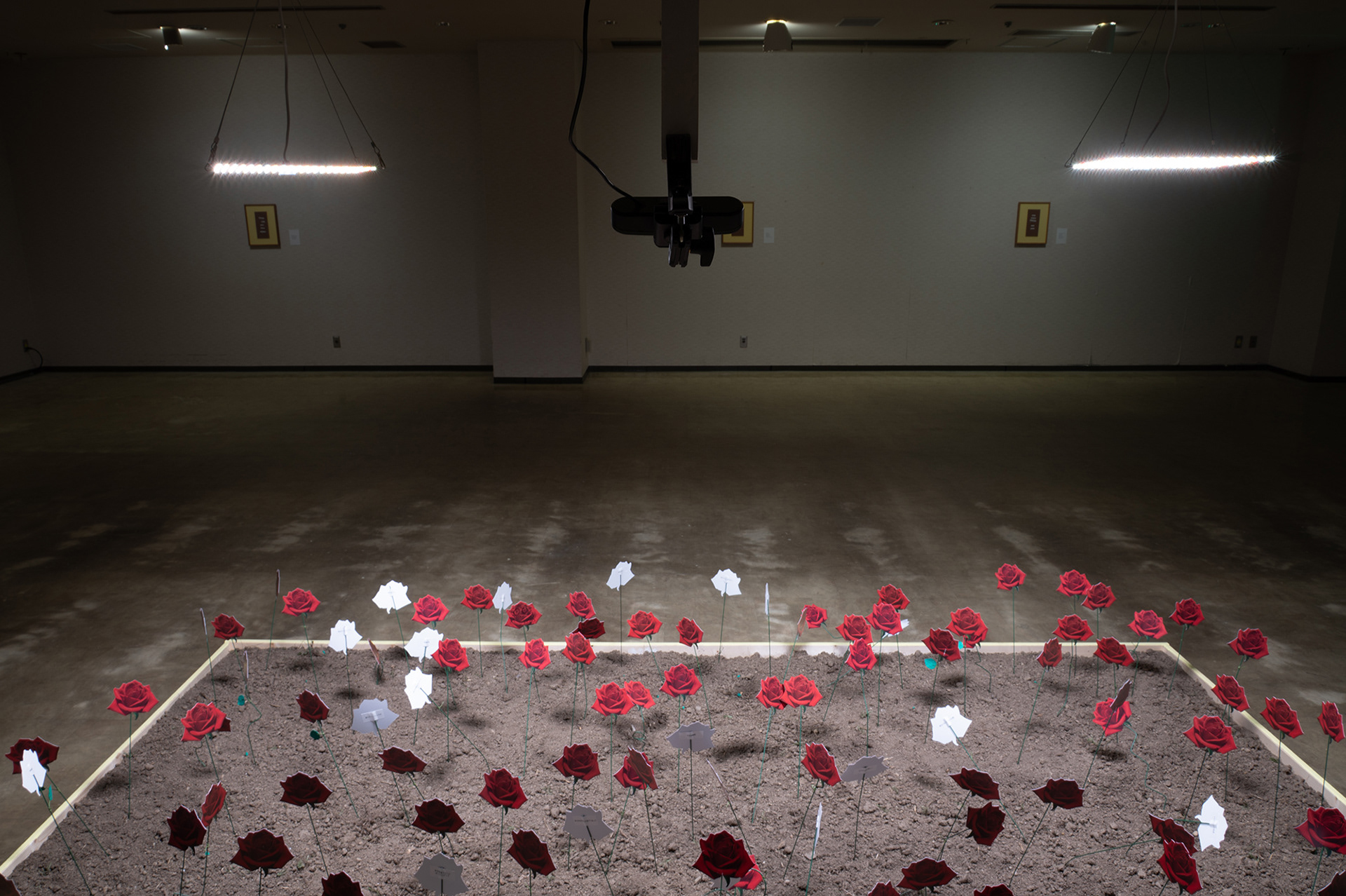
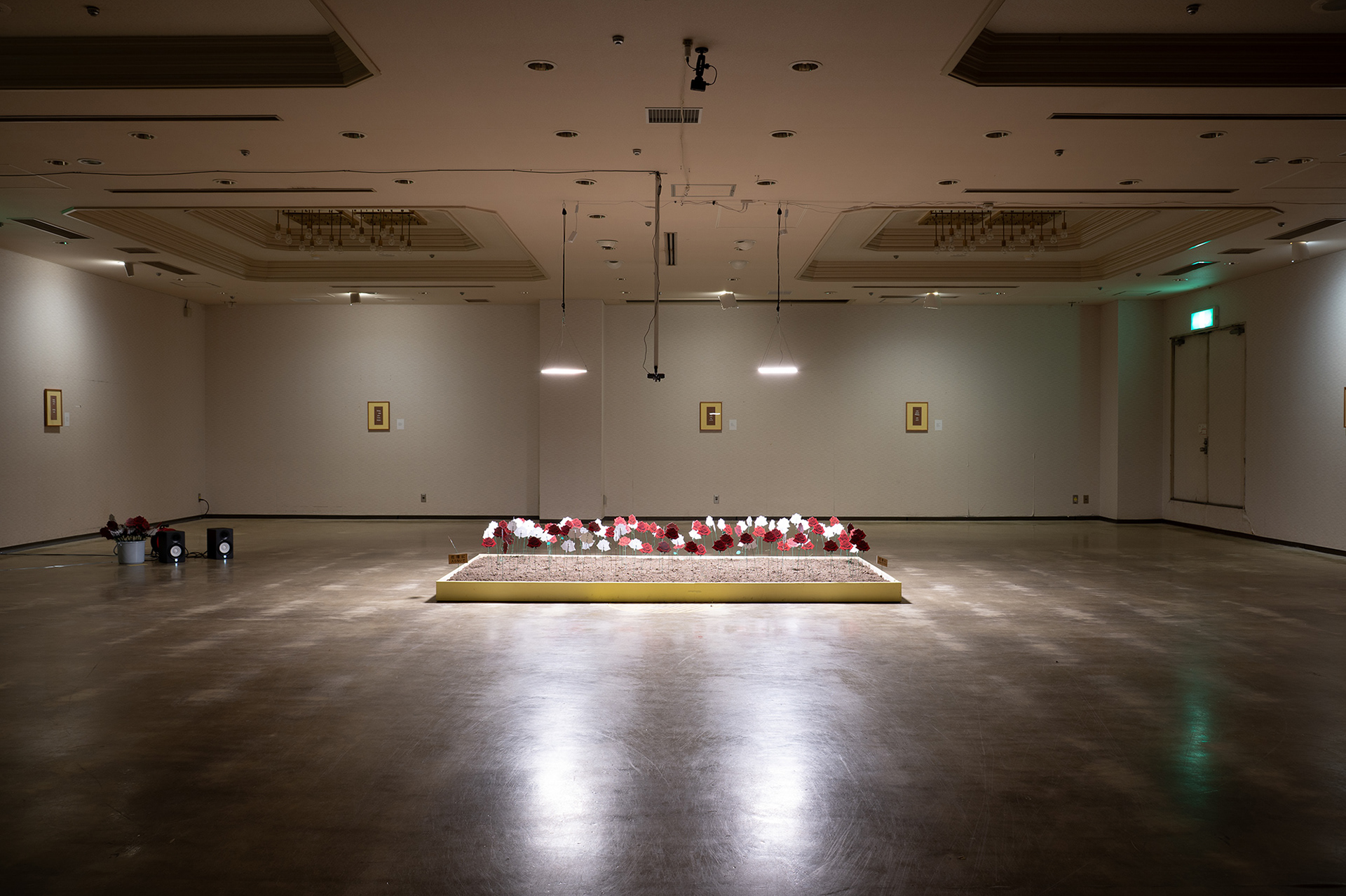
In the Analog Room, a real flowerbed awaits; visitors may plant their rose there. They may also create new text collages using the voice fragments on the reverse. Accidental or intuitive combinations become human horsepower, a force that breaks homogenisation and generates new perspectives by linking the unlike with the unlike.
A USB camera in the Analog Room reads only the placement coordinates of the roses and sends this data to the Digital Room.
It recognises no meaning, colour, or emotion. There, AI evaluates the state of the garden, but gives no instruction. Interpretation remains entirely with the human.
Information fossilises, is later unearthed, combines with action, and reappears digitally as new relationships.
This installation presents that cycle as a single living organism.
And the installation itself becomes a small seed of metabolism, passed forward into society.
A process that continues beyond this space and into the future.
Gardens of Becoming Long Version:
There are four rooms in this installation:
the Lobby (green), the Red Room, and the two rooms functioning as a metabolic circuit, the Analog Room (yellow) and the Digital Room (pink). The Lobby and Red Room stand independently, but the latter two operate only as a pair, forming the cognitive mechanism called 'Garden of Becoming'.
The organising framework of the exhibition is information metabolism: just as soil decomposes dead growth into nutrients for the next bloom, information, too, becomes fixed, excavated, mixed, and transformed - a seed for another emergence.
The Lobby functions as the layer where seeds enter. The Red Room is a stratigraphy of voices, a site of excavation and relational reconfiguration. The Analog and Digital Rooms form the metabolising joint where human action and AI response circulate.
All four chambers are necessary; without one, the cycle collapses.
Visitors begin in the Lobby and receive a paper rose. A flat, reproducible artefact signifying fixed information.
On its reverse are written fragments of voices gathered in Ibaraki. A polished surface and a trembling underside: presence and instability held in one object. It is a seed in waiting, a unit of latent meaning, activated only when planted later in the garden.
Inside the Red Room, visitors immerse in listening. Typewritten interviews cover the walls on photocopier papers, and reading becomes a form of unearthing. “Ibaraki City” here is not a fixed identity, but relational, vibrational, continuously forming.
As Gregory Bateson suggests: the world arises in relationship, not in object.
The Analog Room holds a living flowerbed. Voices of citizens and AI intermingle, looping, drifting and occasionally glitching.
Visitors may plant their rose or use the fragments on the reverse to build new text collages. Words may form through accident or intuition; poetry might surface or dissolve. These acts of selection and recombination express human horsepower which is the capacity to generate difference, bridge the dissimilar, and create new sight lines.
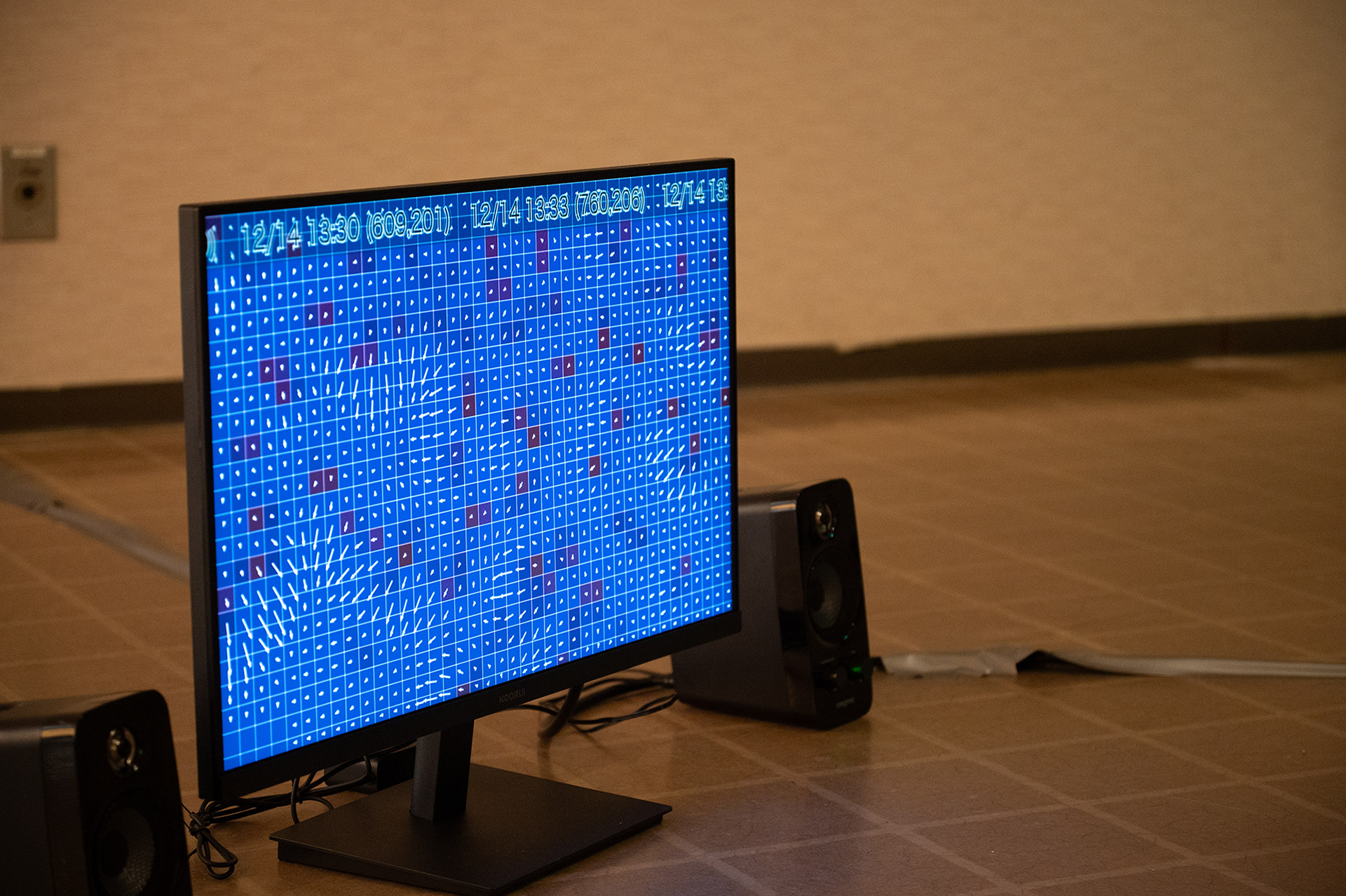
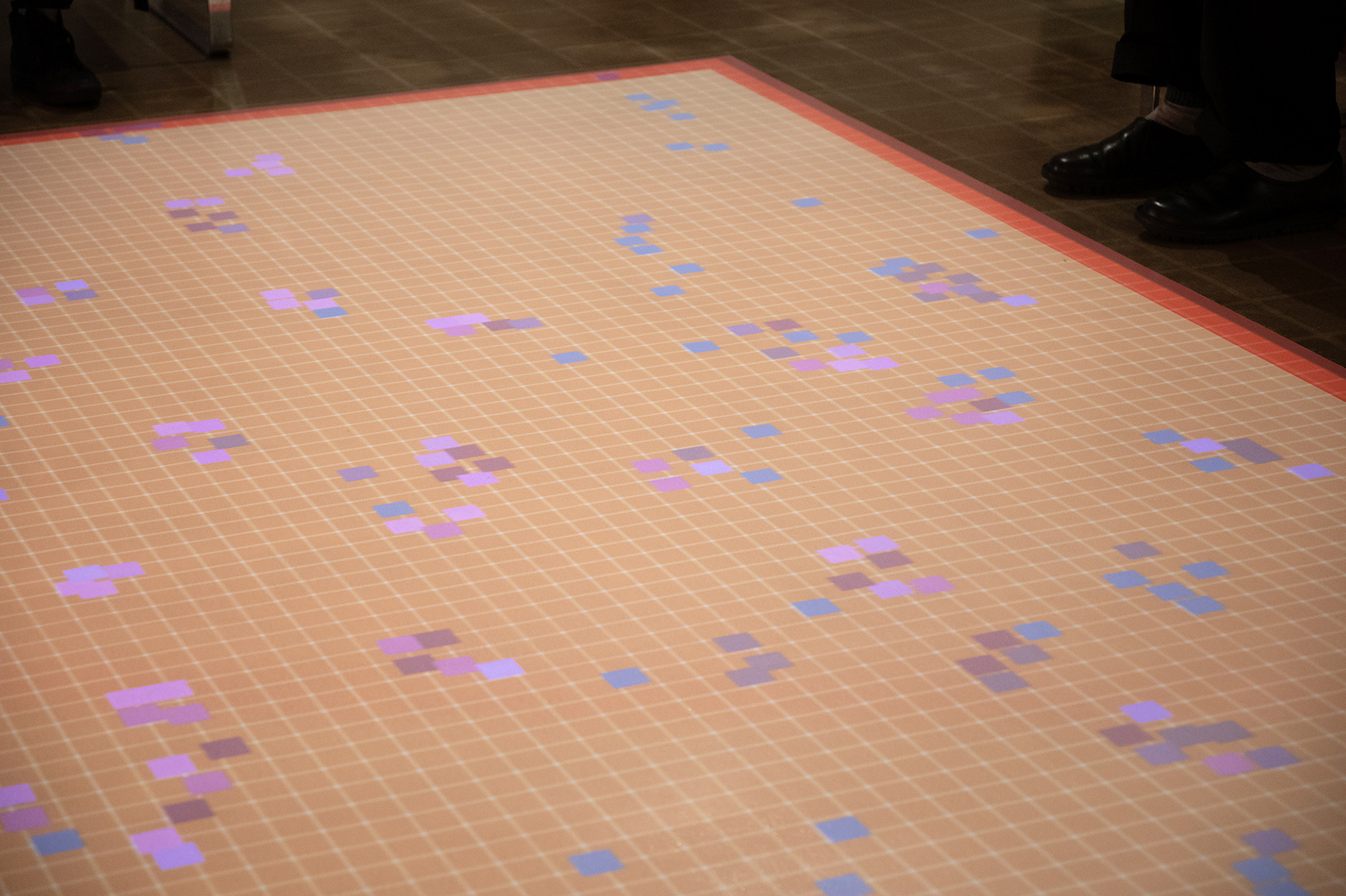
A USB camera at the flowerbed records only the number and coordinates of the roses. Meaning, colour, sentiment, all remain unread. This data transfers to the Digital Room, where a dot-based digital garden expands across the floor. A monitor streams the coordinates like market prices while AI evaluates the garden from excellent to critical in real time. Yet the AI gives no instruction.
Interpretation is always returned to the human.
This structure reveals the fault line between analog and digital.
The physical world is gradient, ambiguous but digitisation compresses experience into 0/1, presence/absence.
Our lives, too, when passed forward, survive as fragments information severed from sensation to the unseen generations in the future.
The physical world is gradient, ambiguous but digitisation compresses experience into 0/1, presence/absence.
Our lives, too, when passed forward, survive as fragments information severed from sensation to the unseen generations in the future.
To be “withered” is not to die, but to stop changing. Like the artificial flowers, fixed information is easy to duplicate, yet does not grow. Thus the role of human horsepower remains essential: the leap, the accident, the recombination that produces new possibility.
That energy becomes the engine of metabolism, enriching the soil for future diversity.
Information fossilises, sleeps, is excavated, binds to action as nutrient, is planted again as new relation, and returns visible on the digital surface. This installation renders that cycle as a single organism.
And the exhibition itself becomes as a seed, a trigger of future information metabolism, continuing through the lives of its visitors
and the societies they will help shape.
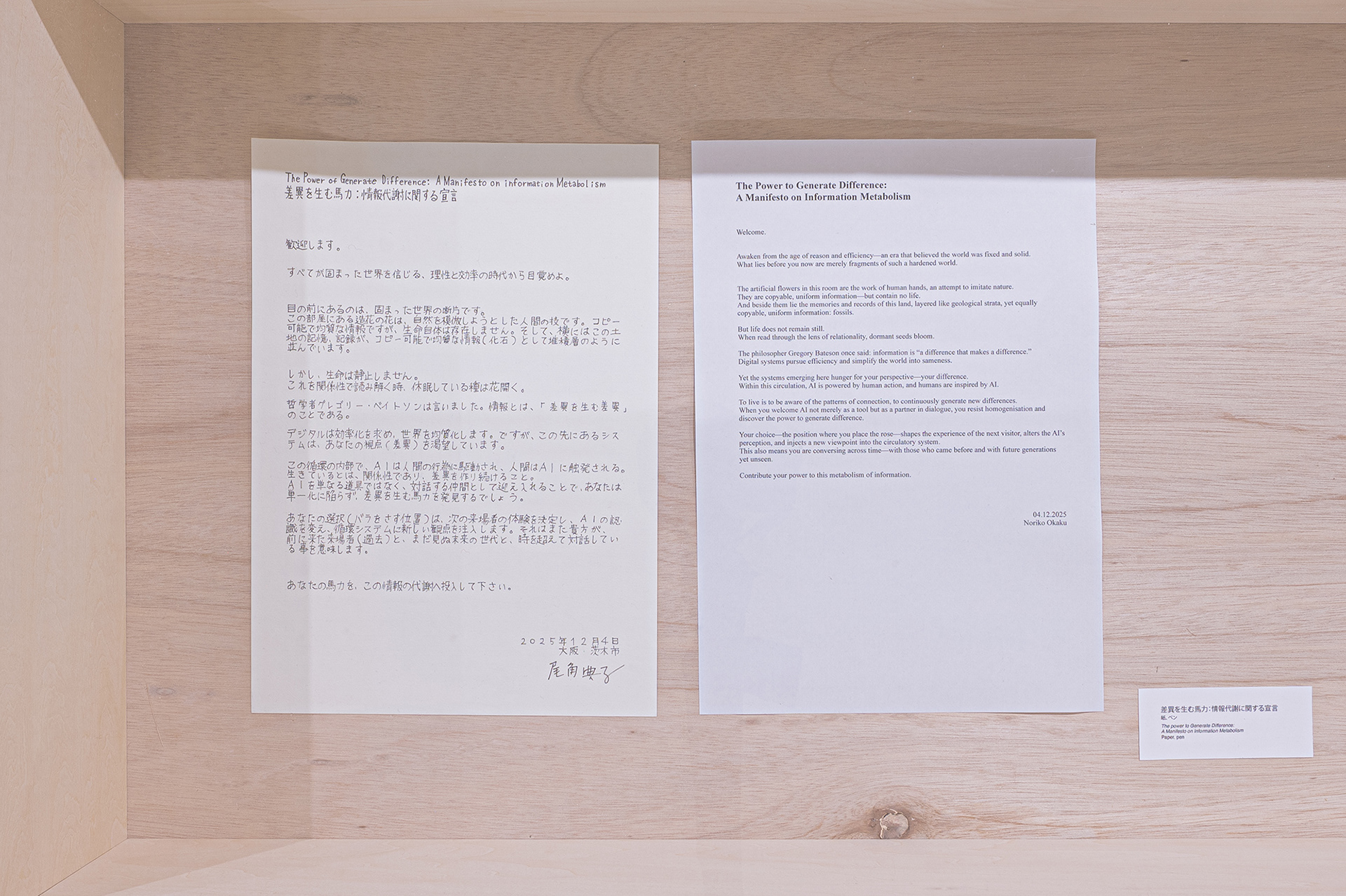
The Power to Generate Difference:
A Manifesto on Information Metabolism
Welcome.
Awaken from the age of reason and efficiency— an era that believed the world was fixed and solid.
What lies before you now are merely fragments of such a hardened world.
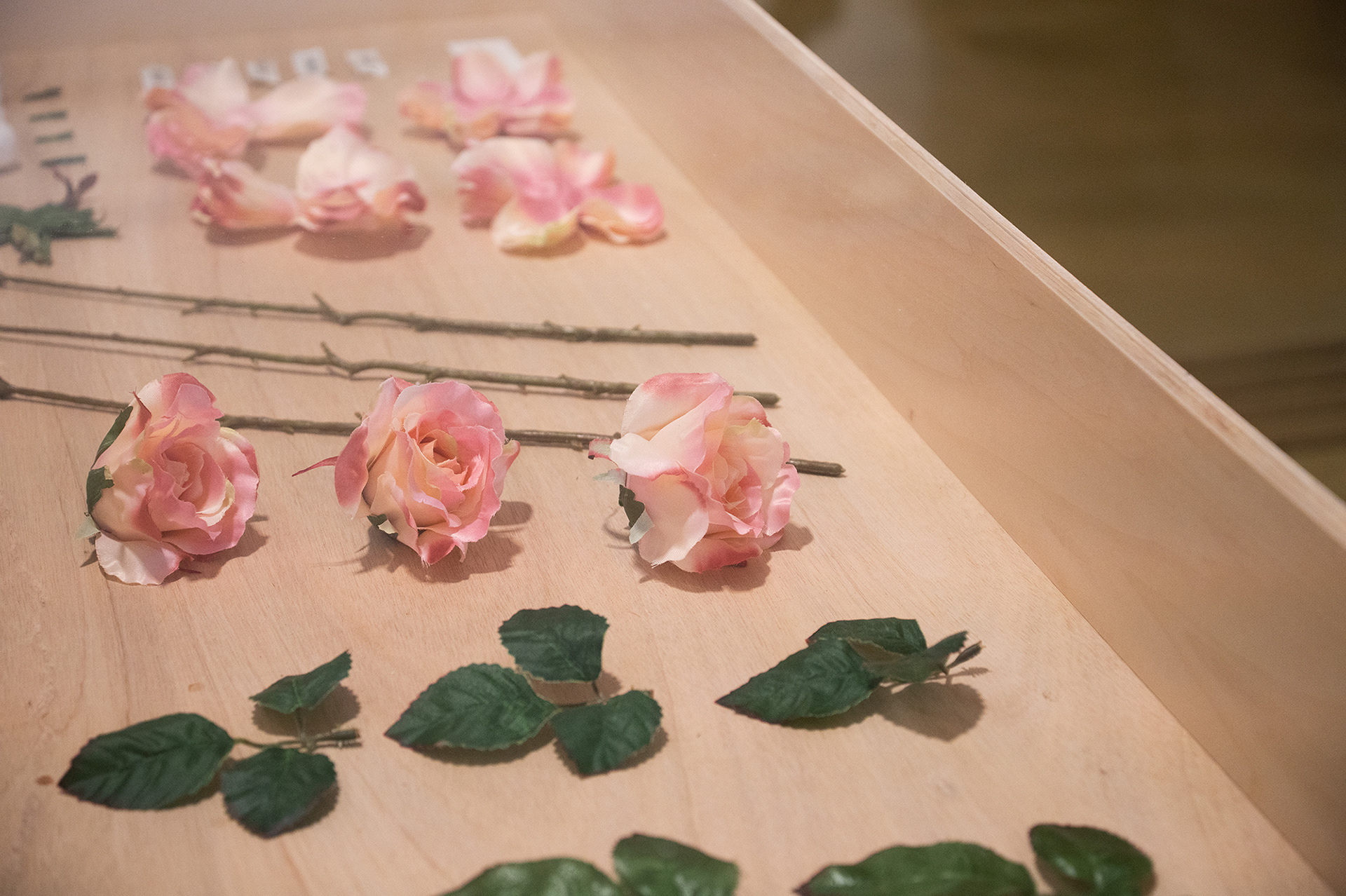
The artificial flowers in this room are the work of human hands, an attempt to imitate nature.
They are copyable, uniform information — but contain no life.
And beside them lie the memories and records of this land, layered like geological strata, yet equally copyable, uniform information: fossils.
They are copyable, uniform information — but contain no life.
And beside them lie the memories and records of this land, layered like geological strata, yet equally copyable, uniform information: fossils.
But life does not remain still.
When read through the lens of relationality, dormant seeds bloom.
The philosopher Gregory Bateson once said: information is “a difference that makes a difference.”
Digital systems pursue efficiency and simplify the world into sameness.
Yet the systems emerging here hunger for your perspective—your difference.
Within this circulation, AI is powered by human action, and humans are inspired by AI.
To live is to be aware of the patterns of connection, to continuously generate new differences.
When you welcome AI not merely as a tool but as a partner in dialogue, you resist homogenisation and discover the power to generate difference.
Your choice—the position where you place the rose—shapes the experience of the next visitor, alters the AI’s perception, and injects a new viewpoint into the circulatory system.
This also means you are conversing across time—with those who came before and with future generations yet unseen.
Contribute your power to this metabolism of information.
04.12.2025
Noriko Okaku